
IFS Cloud – Enterprise Resource Planning (ERP)
IFS Cloud brings together all enterprise-level solutions, including Enterprise Resource Planning (ERP), Enterprise Asset Management (EAM), and other solutions, while providing industry-tailored capabilities that truly address your operational requirements.
IFS Cloud – Diverse ERP Solutions Supporting Various Business Groups
IFS Cloud is modular ERP software designed to allow organizations to select and install modules in packages that match current needs or align with established budgets. It offers flexibility and scalability in ERP system implementation, enabling organizations to execute business processes with maximum efficiency.
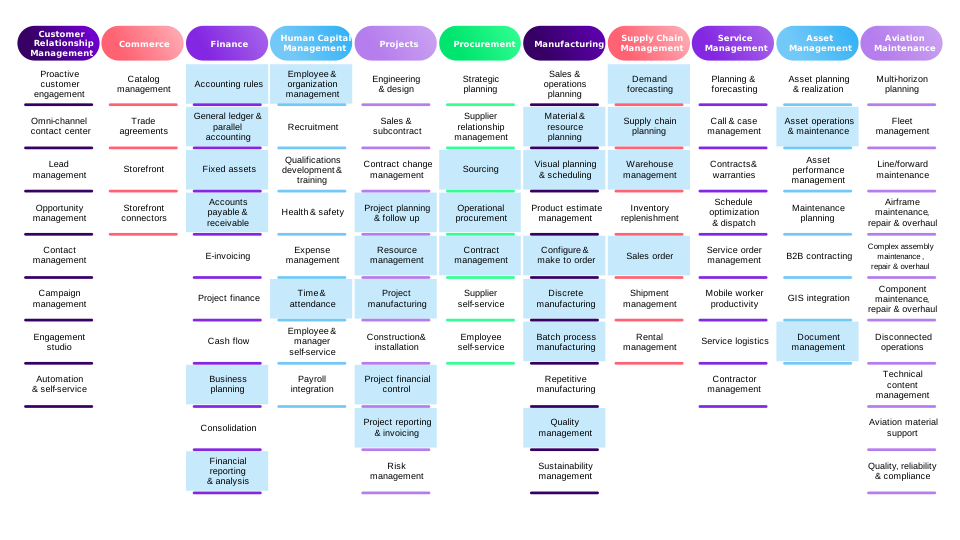
The Module Chart shown above demonstrates that IFS has curated sub-modules suitable for organizations requiring general ERP systems, which include Finance, Human Capital Management, Procurement, Manufacturing, and Supply Chain Management. These modules feature distinctive functions that enhance operational efficiency in each area as follows:
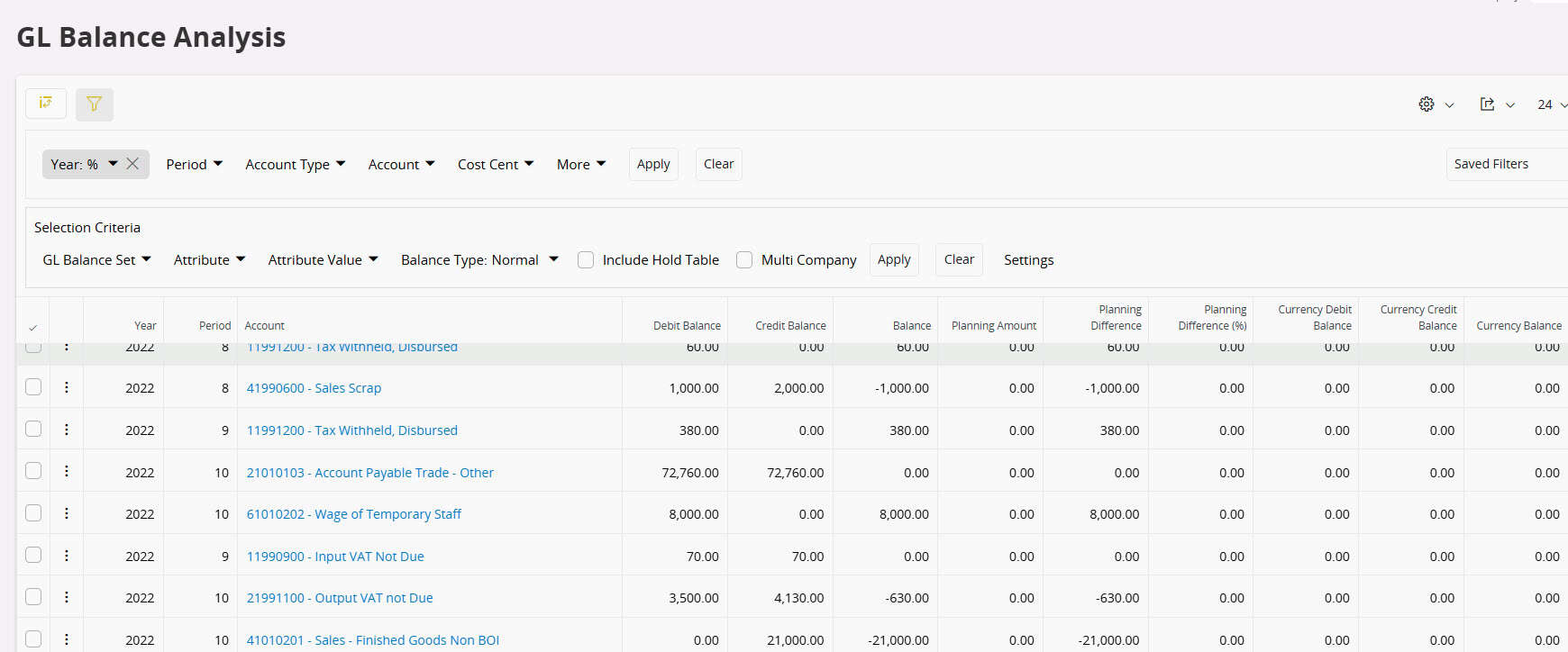
Finance System (IFS Finance)
The IFS Cloud finance system supports multi-company and multi-currency functionality, with automatic voucher generation capabilities based on defined chart of accounts, reducing manual workload. The accounts payable/receivable system stores data and details about customers and suppliers, including credit terms, discounts, and procurement agreements. Accounts payable and accounts receivable integrate efficiently with other modules. For example, accounts receivable works with the Sales Order management system—when goods are delivered, the accounts receivable system automatically generates invoices. Accounts payable manages procurement expenses by receiving supplier bills, with the ability to reference purchase orders during bill registration.
The General Ledger (GL) sub-module serves as the core of the finance system, featuring functions for reporting and analysis by retrieving vouchers from other modules to perform month-end or year-end closing. The system includes reconciliation tools to ensure data accuracy before closing. Additionally, the Tax Ledger function assists with tax reporting.
The Fixed Asset sub-module helps organizations manage assets throughout their lifecycle, from asset registration (Fixed Asset Object) and data storage—including procurement details, values, vendors—to specifying asset categories, useful life, and depreciation methods such as Straight-line, Declining Balance, or Units-of-Production. This module also tracks asset location and current value.
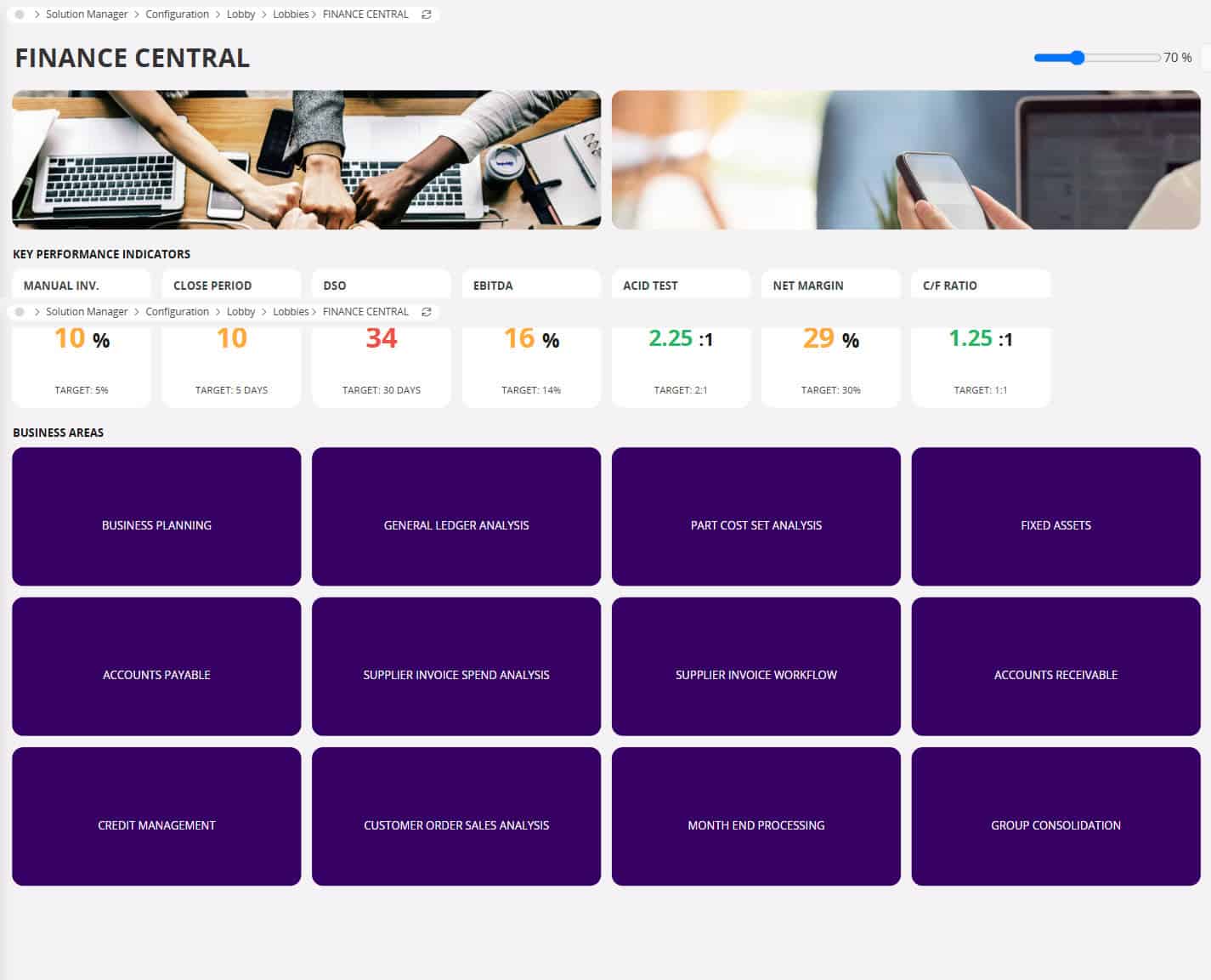
The IFS Finance module comprehensively supports all accounting functions while enabling users to search historical, current, and future data. It supports various financial reporting needs to provide executives with information for business analysis and decision-making, such as the Lobby Finance Central dashboard that summarizes key KPIs.
Human Capital Management System
(IFS Human Capital Management)
The Human Capital Management module is essential in the IFS Cloud system as it pertains to employees and system users in terms of Security & Permission through the User Management function, which determines which activities users can perform and what data they can access in the IFS Application.
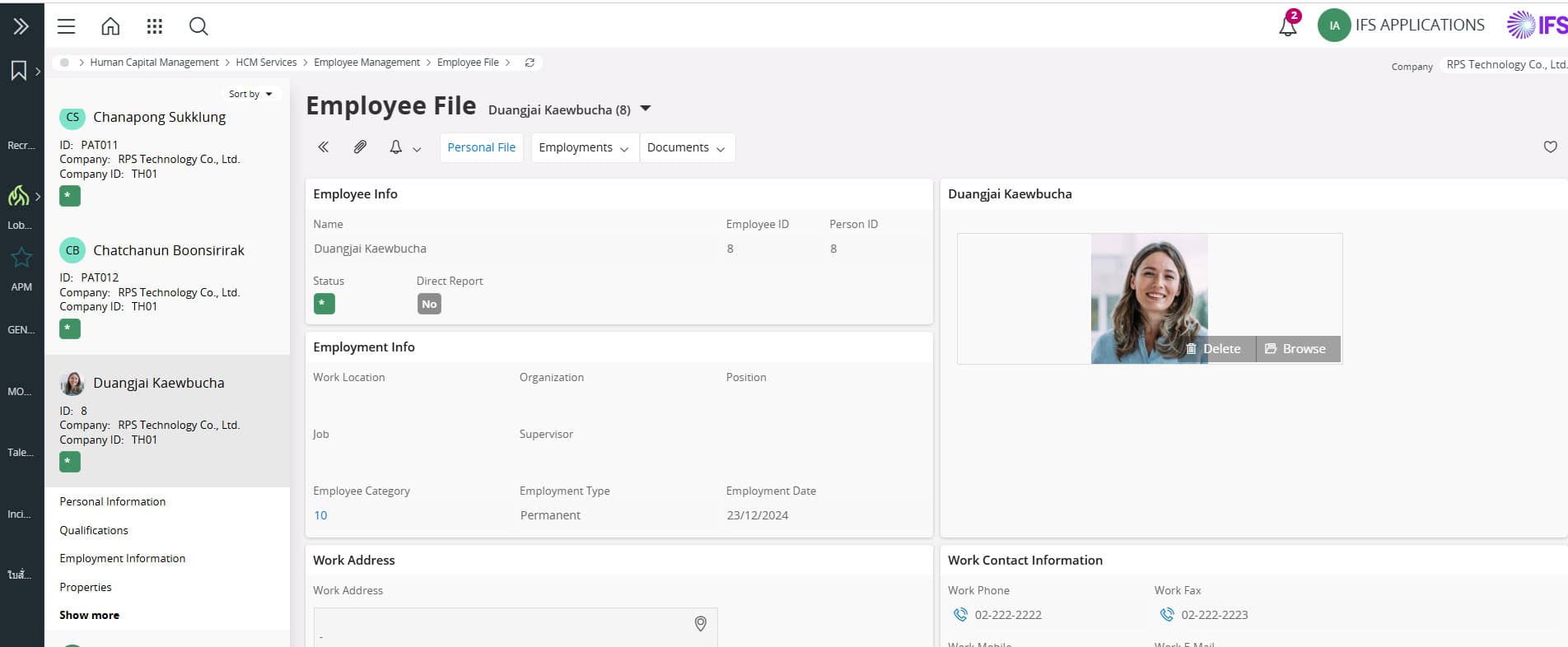
Additionally, the IFS Human Capital Management module enables the HR department to store various employee records, including work history, education, special courses, and certificates. This data can be used to assess employee competency and analyze how the organization can help employees enhance their skills and qualifications.
Procurement System (IFS Procurement)
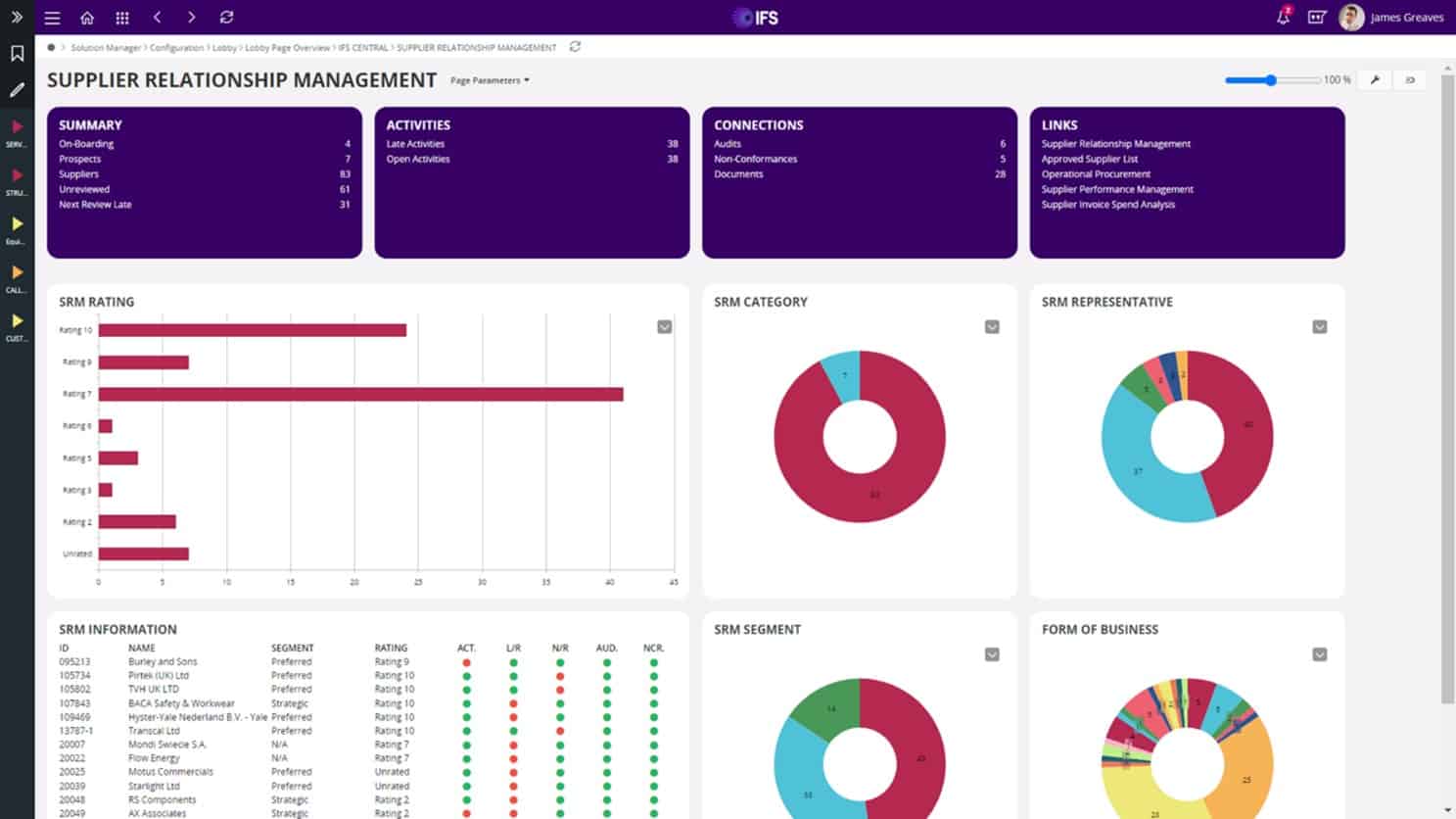
IFS Procurement module helps organizations manage purchasing from start to finish, including supplier payment. Through Supplier Relationship Management functionality, organizations can manage supplier data—such as categorizing suppliers by type or ranking them by performance KPIs including delivery accuracy, product quality, and issue resolution. This data enables the system to recommend suitable suppliers, reducing procurement costs.
The IFS Sourcing sub-module manages the Request for Quotation (RFQ) system to solicit quotes from suppliers, compare and evaluate pricing, delivery, and quality. The system can also automatically generate RFQs based on inventory levels, project requirements, or production planning schedules.
The Contract Management sub-module manages supplier contracts regarding terms and pricing. The system tracks contract changes and verifies that all contract terms meet organizational standards before approval. It also provides notifications when contracts approach expiration and facilitates contract renewals.
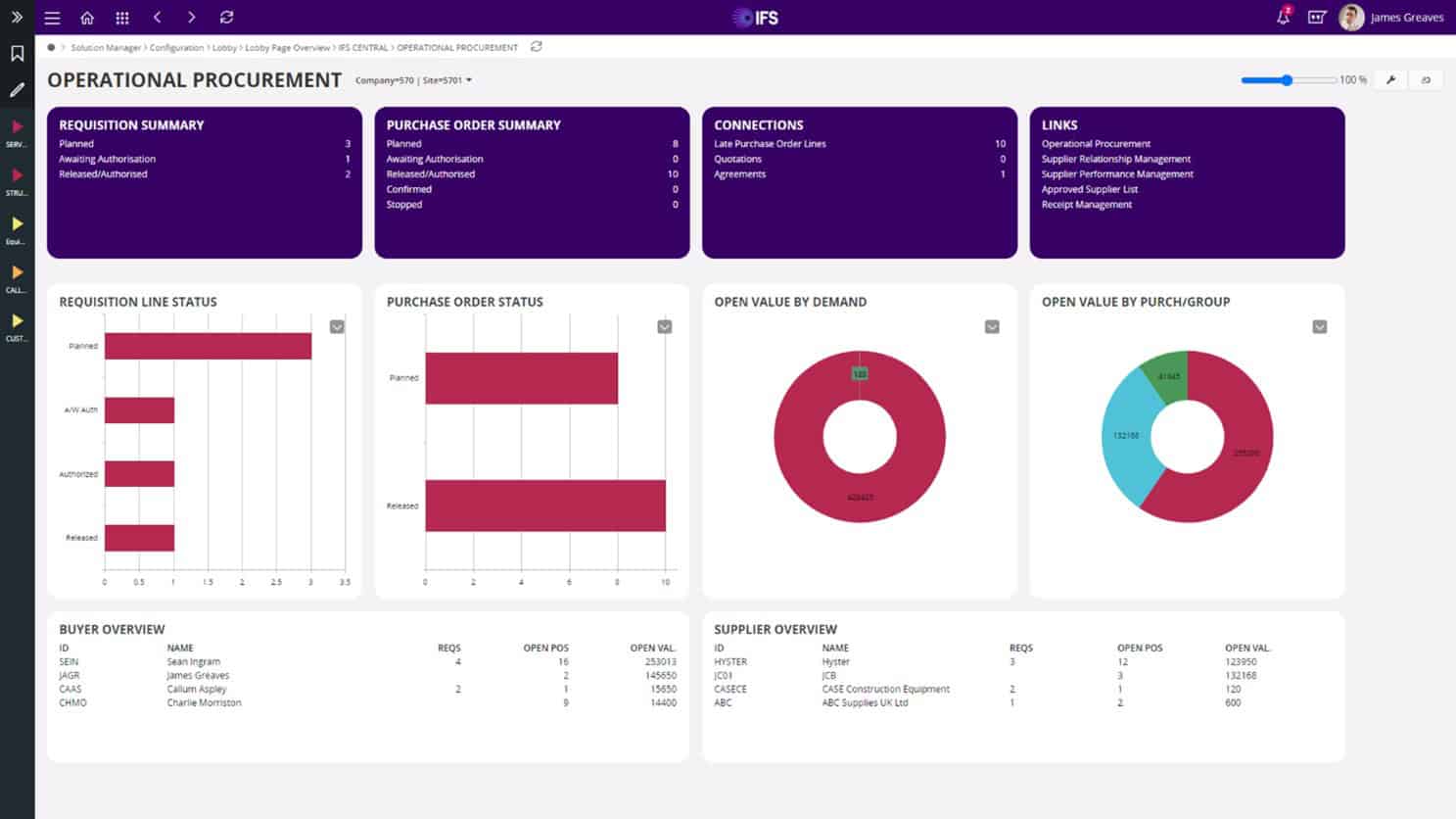
The Operational Procurement sub-module manages Purchase Orders, creating them from approved purchase requisitions or ordering plans. The system tracks purchase orders from start to finish, monitoring delivery and inspection before receiving goods into inventory or processing returns if inspection fails. After receiving goods, it integrates with the Accounts Payable system (IFS Account Payable), allowing users to specify purchase order numbers when registering supplier invoices, which aids in tracking the procurement process and goods receipt reporting.
IFS Procurement provides deep insights into purchasing that enable organizations to analyze and improve procurement strategies. It serves as a key tool helping organizations understand both current and future sourcing needs while identifying opportunities and cost savings that may arise in the future.
Manufacturing System (IFS Manufacturing)
IFS Manufacturing supports all production process stages, from planning through execution and production control, accommodating various manufacturing models including Configure-to-Order Manufacturing, Discrete Manufacturing, and Batch Process Manufacturing—covering everything from production requests to finished goods receipt into inventory.
It also supports diverse production formulas, such as Bill of Material (BoM) or Recipe formats, and appropriate production routing for each manufacturing type.
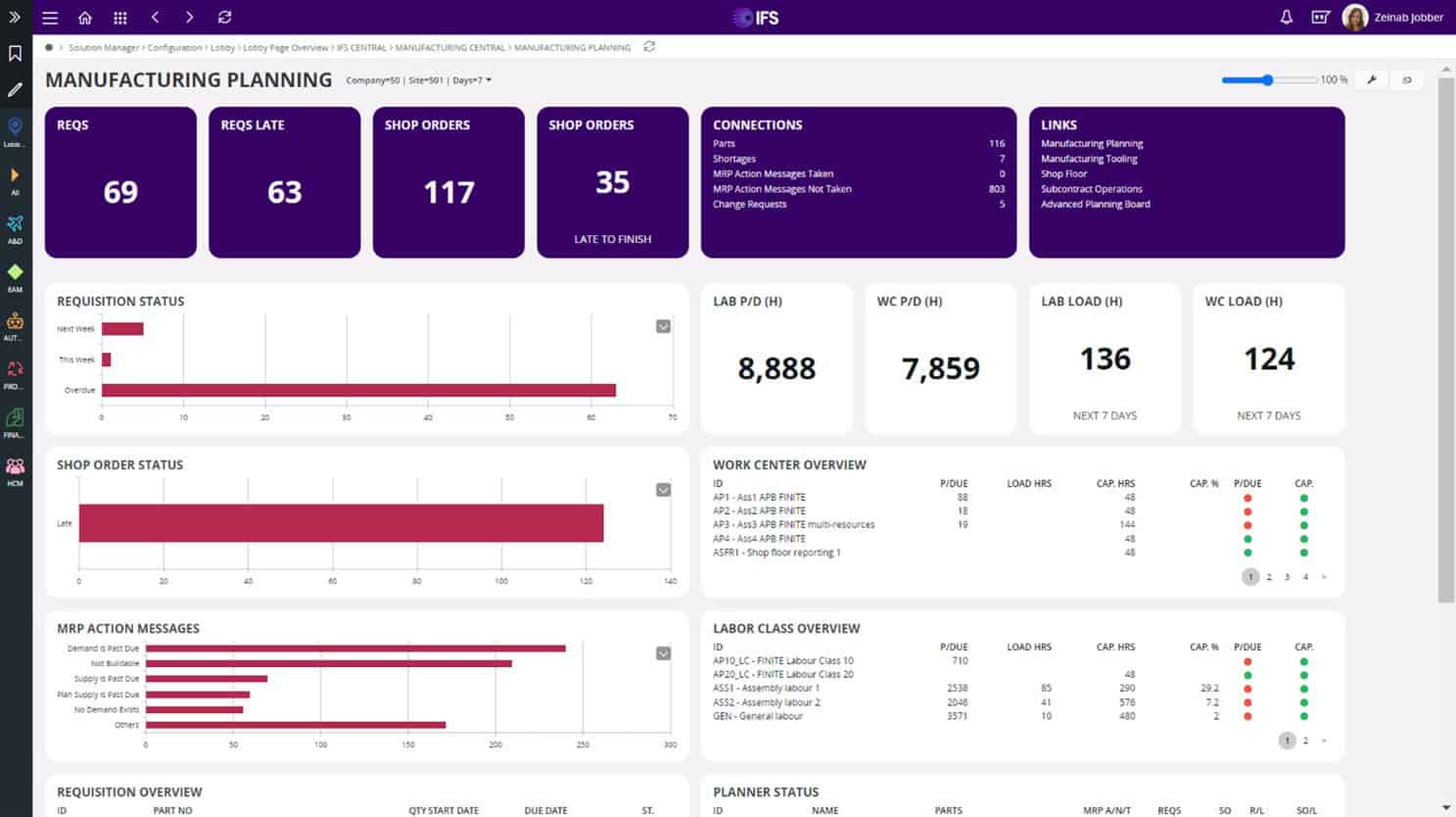
The Material and Resource Planning sub-module in IFS Manufacturing provides critical functions supporting material, labor, machine, or other resource management required for production. This function calculates material requirements based on sales forecasts, customer orders, or inventory levels to help manage stock and prevent shortages or excess inventory. It can also allocate materials according to production orders by prioritizing urgency.
IFS Capacity Requirements Planning is a tool that calculates and plans labor by pulling data from various sources such as Master Scheduling, Material Planning, and Order Proposals.
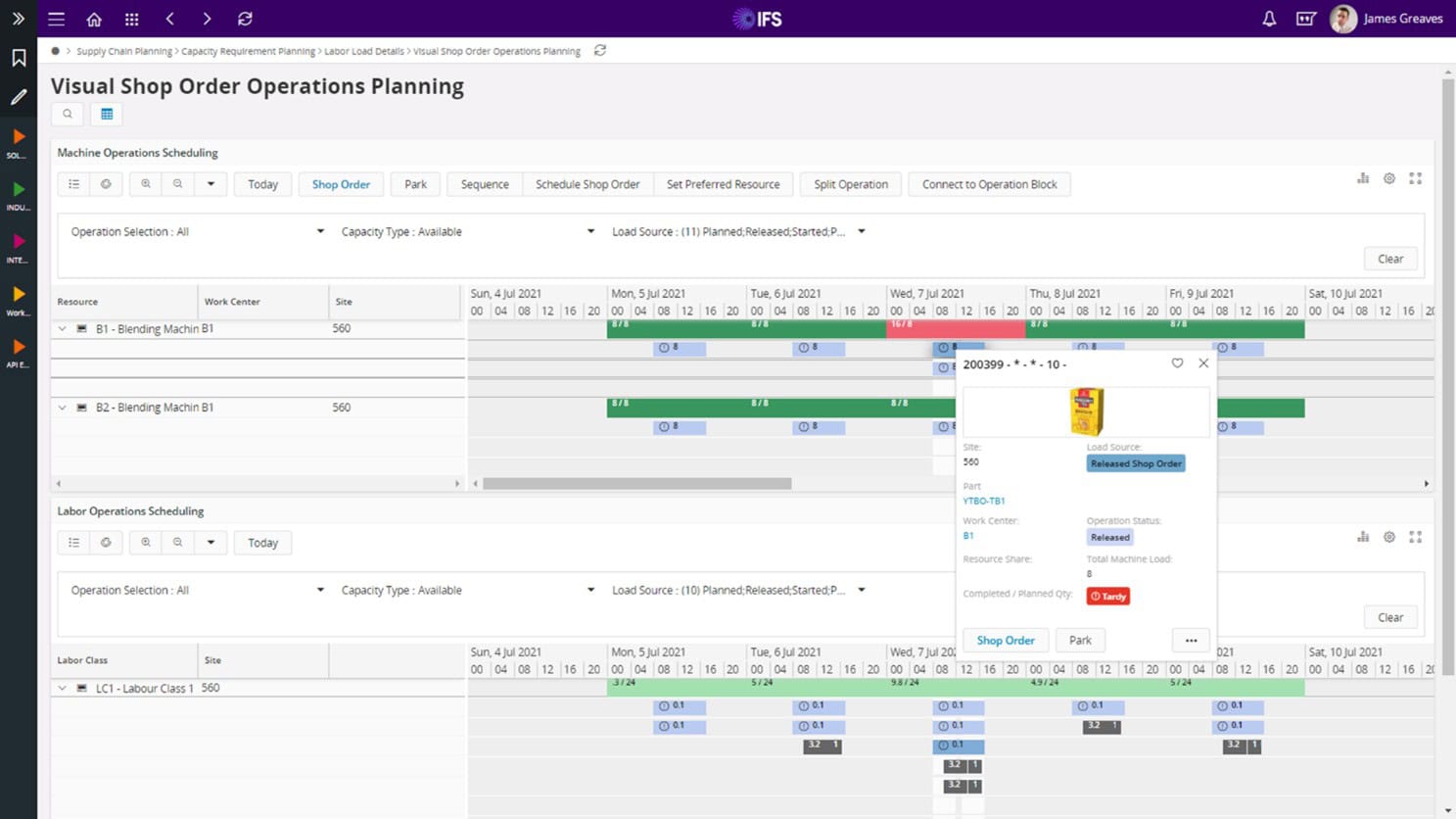
Additionally, the IFS Visual Shop Order Operation Planning sub-module offers functions for production planning and scheduling using limited or unlimited available resources. The resulting plan identifies production bottlenecks or material shortages, enabling organizations to make rapid decisions to address material shortages or overload situations. This function also assists with job sequencing or optimization settings for production groups.
IFS Manufacturing is a comprehensive solution that integrates data from all areas of manufacturing organizations—whether production planning, Supply Chain management, accounting, or other departments—sharing information across all units in real-time. This is essential for Smart Factory systems that require data for decision-making, production monitoring, and Supply Chain problem resolution.
Supply Chain Management System (IFS Supply Chain Management)
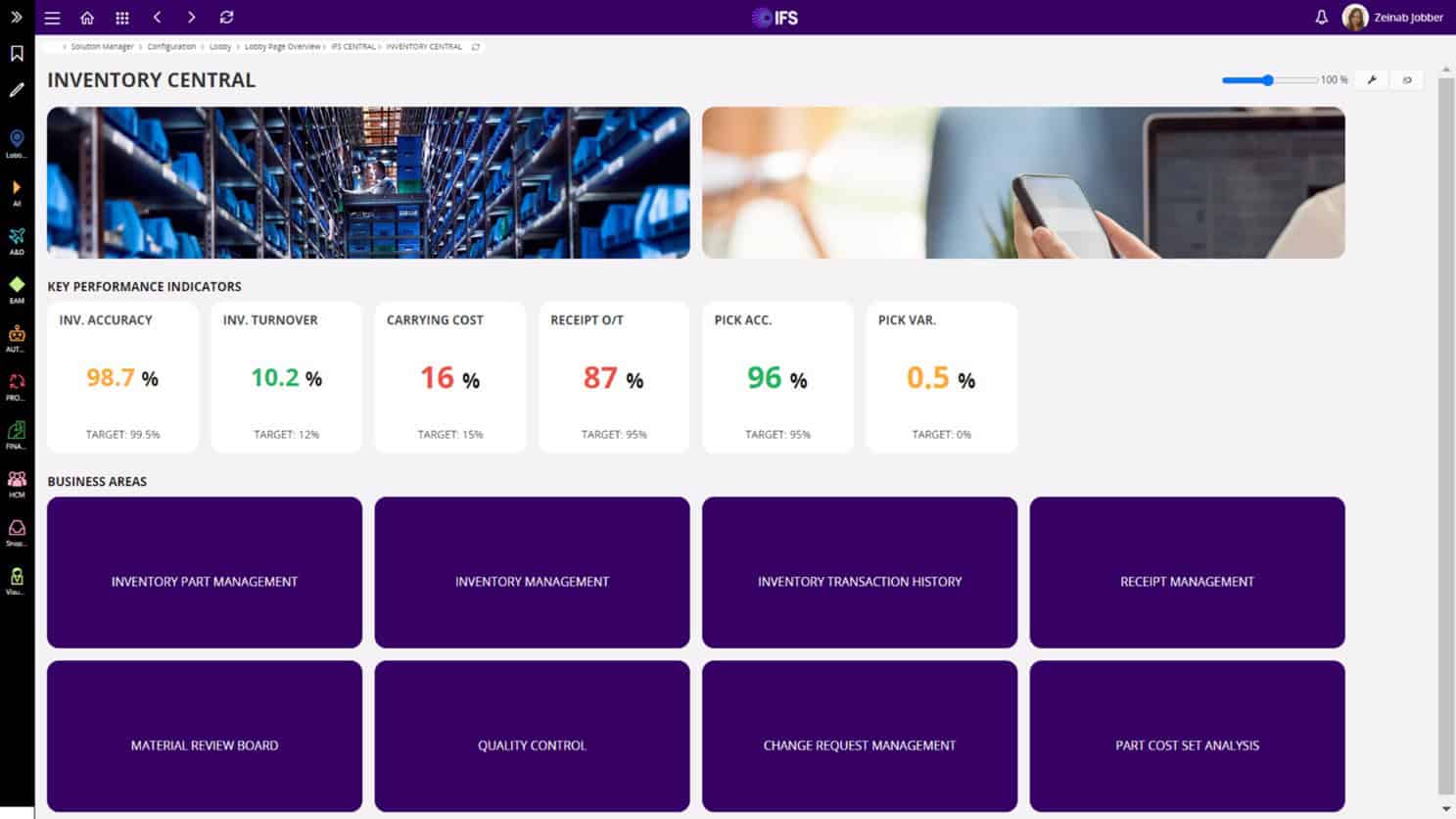
A robust supply chain management system helps organizations store and deliver goods efficiently. The IFS Warehouse Management sub-module handles warehouse operations for both inbound and outbound processes—from receiving, storage, picking, packing, to goods dispatch. Users can track stock, manage shelf life, plan storage space considering area constraints and material limitations, track items by lot or batch, and support both First In First Out (FIFO) and Last In First Out (LIFO) costing methods for material management and reorder point management.
Additionally, in warehouse operations including receiving and issuing goods, accuracy can be enhanced using barcode technology, Radio Frequency Identification (RFID), and handheld scanners to help warehouse staff reduce redundant work and promote paperless operations.
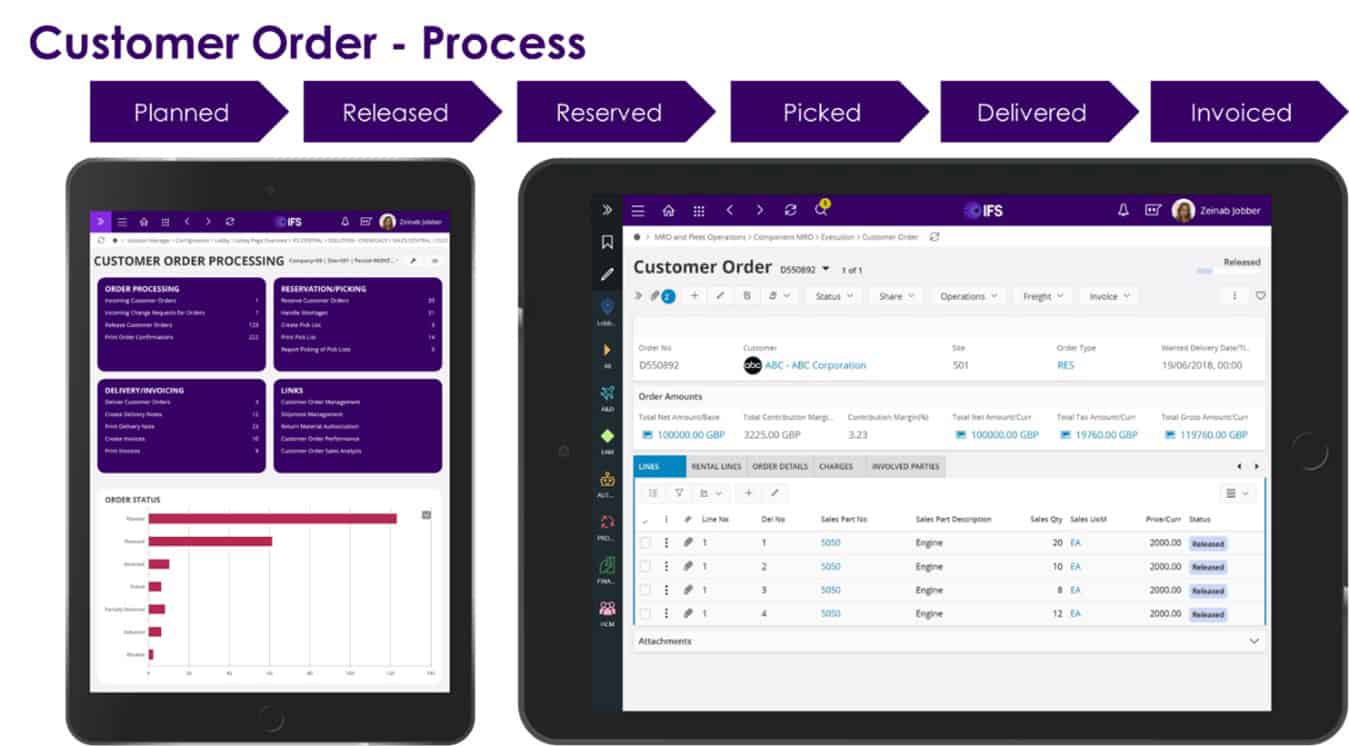
The Sales Order System (IFS Sales Order) sub-module integrates seamlessly with warehouse management, manufacturing, and accounting systems, with users able to view real-time updated data at each stage. Sales Orders begin with Sales Quotation creation and progress to Sales Order status. The system supports various Sales Order formats including standard, blanket, or recurring Sales Orders.
After the Sales Order is created, the system reserves inventory and processes delivery by generating required documents such as picking lists or packing slips, and issues invoices for delivery. At each stage, sales staff can verify in real-time which stage the Sales Order has reached.
These are just the core functions of IFS Cloud. In reality, IFS Cloud offers many more distinctive functions across other modules, ready to help user organizations enhance competitive capabilities and support Digital Transformation with data shared across organizational units from upstream to downstream.
The seamless connection of user experience and solutions makes our products immediately deployable while remaining easy to use and customizable. You can easily scale and connect your software with IFS Cloud.